Invited Speakers
Vinodkumar Prabhakaran
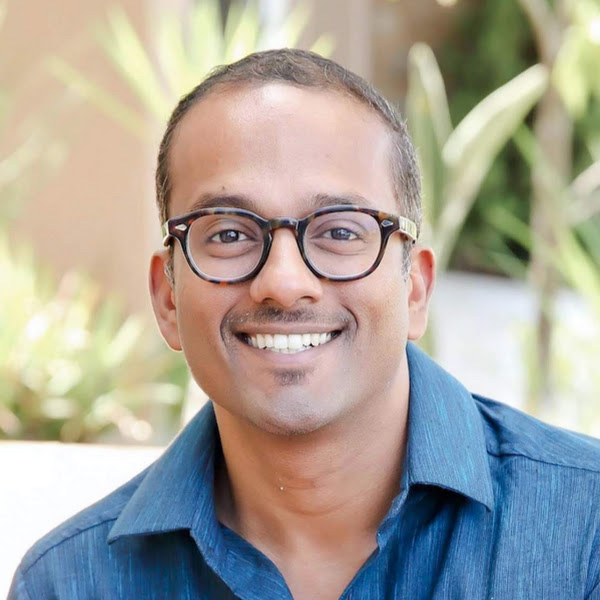
Google Research
Date: October 29, 2026
Location: G13-14
Talk: AI for the World of Many
Abstract
As generative AI is increasingly deployed globally, it encounters a “world of many” — many users, many languages, many cultural contexts, and many value systems. However, these technologies are often developed within relatively monocultural contexts, leading to significant “cultural incongruencies” when deployed at scale. In this talk, I will discuss our recent research demonstrating that crucial concepts in AI — including core safety notions like offensiveness and harm, and even preferences for human-likeness in LLMs — are not universal truths but are deeply socially situated. I will discuss our recent work that propsoes a systematic approach to conceptualizing, operationalizing, and benchmarking cultural intelligence in AI systems, and discuss how we can integrate intentionally diversified socio-cultural data, devise pluralistic evaluations, and develop geo-culturally grounded interventions to build AI systems that are transparent, controllable, and responsive to the complexities of a global audience.
Bio
Dr. Vinodkumar Prabhakaran is a Sr. Staff Research Scientist at Google Research, where he co-leads the interdisciplinary Technology, AI, Society and Culture (TASC) team. His research deals with questions at the intersection of AI and society, with a focus on global and cross-cultural considerations. Before Google, he was a postdoc at Stanford University, and obtained his PhD from Columbia University. His prior research focused on building scalable ways using language technologies to identify and address large-scale societal issues such as racial disparities in policing, workplace incivility, and online abuse. He has published over 50 articles in top-tier venues such as the PNAS, ACL, TACL, NAACL, EMNLP, NeurIPS, and FAccT.
Xuechunzi Bai

University of Chicago
Date: October 29, 2026, 14:45–15:30
Location: G13-14 / Online
Talk: A Psychological Perspective on Pluralistic AI Alignment
Abstract
Alignment concerns how to ensure AI operates in accordance with human values. A key challenge is that human values vary across cultures and contexts, but this diversity is unevenly represented in the data from which models learn. Existing approaches primarily focus on putting guardrails to constrain model outputs without ensuring diversity in the data that shape model behavior. Drawing on psychology, I present three studies examining how biases persist, emerge, and can be mitigated. First, value-aligned models retain stereotypical associations that mirror human biases, showing that suppressing explicit bias does not necessarily eliminate implicit bias. Second, even when bias is absent initially, models can develop it by exploiting what has worked in their online experiences while insufficiently exploring alternatives. Their decisions shape subsequent experiences, reinforcing these biases and could compound them if incorporated into further training. Third, AI can help mitigate biases by nudging humans in producing more diverse content. Carefully designed AI writing assistants can encourage people to produce counter-stereotypical descriptions they might not otherwise consider. This suggests a way to diversify the representations that circulate in society and may become future training data. I argue that pluralistic alignment requires continual governance and human-centered intervention in the feedback loops linking models, people, and data, extending beyond one-off guardrails to the diversity of perspectives and experiences from which AI learns.
Bio
Xuechunzi Bai is the Neubauer Family Assistant Professor of Psychology at the University of Chicago. She is affiliated with the Center for Computational Social Science and the Center for Decision Research at the Booth School of Business. She studies how individual decisions and social structures interact to shape stereotypes and social biases in humans and AI systems. Her research combines large-scale behavioral experiments, computational cognitive modeling, naturalistic data analysis, and comparisons between humans and large language models. She received her PhD in Psychology and Social Policy from Princeton University, with a certificate in Statistics and Machine Learning in 2024.
Vered Shwartz
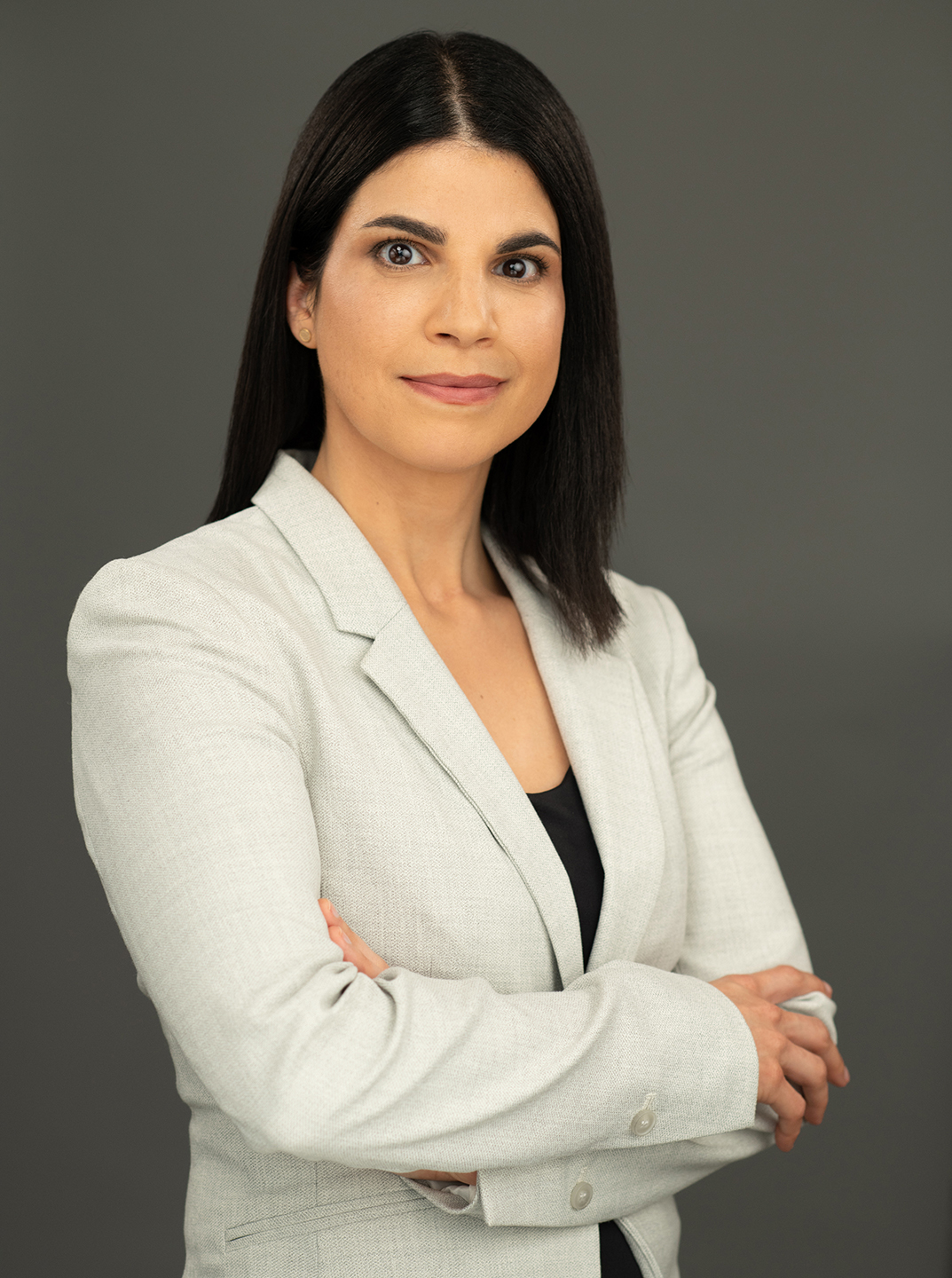
University of British Columbia; Vector Institute
Date: October 29, 2026, 16:00–16:45
Location: G13-14 / Online
Talk: To Personalize or not to Personalize? That is the Question
Abstract
Millions of users worldwide interact with LLMs daily to seek advice, information, and assistance. To maximize the effectiveness of these interactions, LLMs can maintain a memory of user preferences and context. In this talk, I argue that personalization carries both advantages and risks. I focus on cultural competence—the ability to respond in ways grounded in appropriate cultural knowledge and norms—as a lens for examining these trade-offs. I will first discuss (physical) localization, one form of personalization that can lead to more effective interactions, yet where current models still perform poorly. I will then argue for a more careful approach when generating conceptually different answers based on a user’s location or cultural background, as this risks perpetuating stereotypes and trapping users in echo chambers. Given that current models are heavily biased toward Western cultures, the status quo of one-size-fits-all is equally inadequate. To address this gap, I will present our work on LLMs with multiple cultural viewpoints.
Bio
Vered Shwartz is an Assistant Professor of Computer Science at the University of British Columbia, and a CIFAR AI Chair at the Vector Institute. Her research in natural language processing focuses on testing and improving the capabilities of large language models and vision and language models, developing culturally-competent AI, and responsible NLP applications in sensitive domains (e.g., legal, medical). Before joining UBC, she was a postdoctoral researcher at the Allen Institute for AI (AI2) and the Paul G. Allen School of Computer Science & Engineering at the University of Washington. Prior to that, she received her PhD in Computer Science from Bar-Ilan University in 2019.